News
Links
We recommend
Interview
| Program Provisions of the Electoral Action of Poles in Lithuania |
|
Speech of the Leader Valdemar Tomaševski during the 7th EAPL Congress
Modern and dynamically developing countries are the countries with efficient management authorities and ordered fiscal and finansial system. Unfortunately, today's ruling coalition of the Republic of Lithuania has no distinct vision of the future of the country, no outlined priorities in the economy, and focuses solely on earnings and expenditures as an accounting office of some kind. After all, the task of the government are far more broader than this, budget makes up only 30 % of GDP, while the rest of GDP is produced outside the budget. For the full development of the country and GDP growth, a perspective vision of the state development and reform of fundamental areas of activity of financial and management structures should be elaborated.
1. Governmental reform Such a small country as Lithuania has too numerous parliament. The number of members of the parliament should be diminished from 141 to 101. Moreover, some steps have to be made in order to strenghten the quality of the Seimas work. We offer to introduce the fulfillment of certain requirements by the candidates to the Seimas. Only people with certain minimum experience or knowledge of state governance could become candidates to the Seimas. Moreover, it would be necessary that candidates were elected to the Council of the Local Government at least once, or eventually run for Local Government at least twice in the past. The number of ministries could be reduced through more accurate division of their functions or eventually through merging some ministries. For example, the Ministries of Economy and of Energy could be merged into one, as some of their functions overlap or even prevent efficient decision making concerning certain economy branches. Although we have ratified the European Charter of Local Self-Government a couple of years ago, the state and development of self-governments in Lithuania is still far from being perfect. The number of local self-governments councillors (1526) elected through general elections is too small. In some governments, e.g. Vilnius, one councillor is representing even several thousand inhabitants. This significantly diverges from standards and indicators established in the states of Western democracy. Extension of self-government and increase of the number of elects in councils can be achieved by introducing a second level of local governments in communes, the number of which reaches 550 in Lithuania. Transmission of part of the competences of municipal and regional governments to already self-governing communes would introduce more self-governance in the area, would dynamise the activity of both electors and theirs representatives in the area. From 15 to 30 councillors could be elected in commune councils depending on the size. That would raise the number of elected people from 1526 to 10 000, and, what's important, these councillors would be elected in general secret free elections together with regional and municipal councillors. It would not require any additional expenses and it would be a more democratic and universal way, because today the mode of communities' formation or soltis election activates only a very small part of local communities. Practically, there would be no additional costs regarding the governance of new commune governments, as they would be operating in the same premises of currently operating county offices. Same, current workers (from 5 to 8 people depending on the county size) would be still working there, except that they would work as a self-governmental unit having its own local functions, having its own, although small, budget, electing a starost democratically and fulfilling other governing functions.
2. The tax system By increasing taxes and eliminating all tax reliefs, the current government stressed once again that it does not have any priorities in the field of state and its economy development. We believe that a state should have at least some economic priorities, which should be supported by tax differentiation.
A. Tourism God has given stunning natural beauty to In the field of tourism we do not make use of our religious and historical potentials. There are a lot of famous places of worship in Lithuania known all around the world, while Vilnius is the capital of divine Mercy, the mostly developing in Catholic Church nowadays. Namely in
B. Biofuels The second priority of the development of the country would be transition to biofuels in heat management and energetics. Nature scanted our country the most commonly used energy sources - coal, oil, and gas. However, after converting, we have a great area and the development potential for bioenergy and biofuels. Currently, the government did not made any steps towards that direction, focusing only on nuclear energy requiring several billions of investments. Generally speaking, the government has no strategy in heat management, although, after converting, the demand for heating in our country is twice higher than the demand for electricity, namely respectively 40 and 20 megawatts. Not only lower price in comparison with gas or other energy carriers, but also other, nowadays favourable for Lithuania circumstances speak for the transition to biofuels. Firstly, the budget of European Union for 2014-2020 has foreseen considerable funds for the development of alternative energy. Secondly, after converting, we have a large territory for one inhabitant and even 800 thousand hectares of land which is not being farmed. Thirdly, what is essential, general transition to biofuels in the heat management according to specialists would cost the country about 4 billion of litas, not several billions, as in the case of the nuclear energy. Moreover, a big part of funds purposed for this aim may be used from the EU funds. Transition to biofuels not only in the heat management, but maybe also in energetics, would as well bring other benefits, not only economic. As an example, we can cite farming of additional 800 thousand hectares of land, which will provide the product, at least 30 thousand of new workplaces in countryside, new jobs in production and processing of biofuels, and ensuring the energetic independence of Lithuania too.
C. Transport The third priority of the perspective development of the economy of our country should be the transport system, especially the transit one, but all the other too. We have a convenient geographical location, access to the sea, open harbour, oil terminal, 4 airports, highways and good roads. I must admit, that the Ministry of Transport and Communications was a good exception from the current government in terms of good governance and here I would like to bow personally before the Minister Eligijus Masiulis. However, we cannot remain in one place and we have to increase the dynamics of the development of this branch as there are still a lot of things to do. Therefore, we have to work in order to attract tourists, develop airports, expand or built a new airport, finalize transit connections VIA BALTICA and RAIL BALTICA. As we propose to organize the transport system as a priority, we have to seriously consider the reduction of excise duties on fuel, what will lead to lower fuel prices on petrol stations, larger dynamics in transport functioning; this would mean greater earnings from fuel sales. It is extremely important when having in mind two neighboring countries of Lithuania which do not belong to the European Union and where excise duties are much lower and fuel is cheaper. When speaking about the transport system, it is also important to act with an aim to preserve public transport system in self-governments. It has to be admitted, that today most self-governments are not able to solve this state-wide problem. In order to save this previously well-functioning system, urgent governmental steps are needed towards VAT reduction for public transport and towards gaining EU funds to modernize public transport. It is impossible not to mention our biggest trouble in the field of transport - this is namely the state of self-governmental roads and local roads as well as approaches. The increase of funding from 20% to 30% from the total road pool is simply essential in this field. Also, the criteria for allocating funds for particular self-governments should be complemented with the criterion of traffic intensity. It is an important criterion, as there are huge differences noticed in traffic intensity in particular towns. It was not taken into consideration as yet. All the above listed priority directions cannot bring development without tax differentiation and tax reliefs. The development is indispensable in the view of the financial self-sufficiency of our country. Other aspects of the life of our country are no less important and we have our specific proposals regarding each of them. We would like to present these proposals for the honourable audience. As it is know, EAPL is determined to gain several seats in the Seimas and form a new government, in which we could encumber leading positions in three or four ministries, i.e. the Ministry of Economy and the Ministry of Transport and Communications, of which activities' directions I have already presented, and the Ministry of Education and Science and the Ministry of Agriculture. Similarly as before, I am going to present our program theses regarding these two ministries.
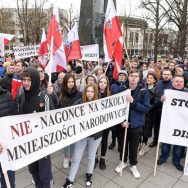
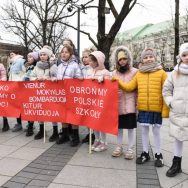
I. Education Currently, Ministry of Education and Science is one of the worst governed ministries. It has invoked a huge public dissatisfaction due its reckless decisions. Reform of higher education was recognised by the Constitutional Court as an anti-constitutional one. The education reform may suffer from the same fate in the future, as its direction violates the rights of teachers, educators, pupils, and their parents too. We have to do everything to avoid the destruction of well functioning education system in Lithuania. We have to preserve secondary schools, countrysides' schools, and traditional model of national minorities' education, which has been functioning efficiently for all 22 years of independency of the Republic of Lithuania. We also have to remember, that good education system, high percentage of well-educated citizens affects the increase of investments and economy development. Until now, probably in the only area - educated population area - we did not step down to the average of the European Union, we were even ahead of some Western countries. Therefore, we have to oppose the pseudo-reforms conducted by the current ministry and preserve the existing, well-functioning education system. The funding of schools according to the universal principle of 'pupil's basket' has to be changed.
II. Agriculture The subject of agriculture was already broached in the program theses regarding the heat management and energetics. Transition to biofuels, as it was already mentioned, would enable Lithuania to achieve energetic independence and provide cheaper energy. Moreover, 30 thousand of new jobs in countryside would be established. And in that case the President of Belarus, Alexander Lukashenko, would not say anything like 'U menia burjan na poliach ne rastiot' (There are no leeds growing on my fields) to our President. It is a matter of a country's prestige and a matter of state, thus decisions should be made at a governmental level. Similarly, the decisions regarding the support of agriculture and farmers in our country should be made at a governmental level too, especially concerning the establishment of agricultural collectives and cooperatives. Unfortunately, the current government, similarly as the previous one, is not working in this direction. It is possible that we have the worst level of agricultural cooperation in Europe. This situation is useful for various monopolists, both from processing and commercial industries. Also, the lack of agricultural cooperation makes if difficult for farmers to make use of credit or other banking services. A fundamental point impeding one or another agricultural initiative is the lack of true independence of agricultural self-governance in our country. With all due respect to the Chamber of Agriculture, the financing of this largest agricultural organization from the state budget does not encourage farmers' dialogue with the government. One of the solutions to strengthen the independence of agricultural self-governance would be one-shot support of infrastructure and the basis of the organization by state with ulterior self-maintenance of its structures and activities by farmers. About the well-know problem regarding still unequal direct payments to our farmers I would like to say just one thing - we are not only mentioning this in our program, but we are also working towards the solution of this problem. Our representative in the European Parliament is the only one from Lithuania working in the Committee on Agriculture and Rural Development, where he has been submitting amendments to resolutions, written declarations, has been mentioning these issues during various meetings as well as has established contacts with the representatives of Latvia, Poland, and other countries suffering from the same problem. We will continue to work hard in order to improve the situation. The effort of the current government to cut down the pool of funding the direct payments from our county was a complete misunderstanding; it could cause the reduction of part of the payments from the European Union to our farmers. This should not happen again; therefore we propose to conclude an agreement between parties regarding this subject. It is important to stress, that we are strictly against the use of genetically modified organisms (GMO) in agriculture and we propose to conclude an agreement between parties regarding this subject too. When speaking about agriculture and land, it is impossible not to mention the restitution of land collectivized by the Soviet system. Unfortunately, there are still a lot of irregularities, fraud, and human harm. A lot of people have gone forever without even having their ancestral land back, while others have enriched with the help of it. Our neighbours, Latvians, have resolved this problem long ago. They have adopted a very good law stating that all land has to be returned, even if it has already been built-up. Of course, with particular limitations. Officials were eliminated out of this process. As a result, the former owner had to deal with the current owner of land or building and had leased or purchased it. In Lithuania, almost uncontrolled officials make all decisions, while the representatives of citizens, elected through the governmental elections, were eliminated out of this process. The adoption of so-called Law on Land Transfer, including vacant one, in 1991 can be described as an economic crime. This law had been operating in 1991-1993, and later from 1997 until today. In practice, many owners cannot get their land back because it has simply run out. In order to somehow rescue the situation, Latvian solutions have to be included into our law and land has to be simply returned to its former owners. The currently offered compensation of 10 thousand litas per hectare in cities is simply a joke made of owners, as the present market price is several hundred times higher.
Now we will present other important program theses.
III. Protection of national minorities' rights There are some fundamental standards regarding the protection of national minorities' rights in the European Union and in Western countries in general. In this case there is no need to reinvent the wheel as these standards have to be applied in real life. In 2000 Lithuania has ratified the Framework Convention for the Protection of National Minorities without any objections. We have to comply with the international obligations concluded in the Convention. I am sure that soon everything will be exactly like that: the use of two or even three languages in public in particular towns or villages will be normal. These standards are mandatory for each Member State.
IV. Social protection During uncertain times, and such are the times of economic crisis, the state has to show more activity and responsibility for common goods. State institutions should provide special protection for the most vulnerable citizens, who without a proper support will not be able to deal with the effects of crisis, which primarily involve prices' increase and real incomes' decrease. Thereby, the costs of households will be raised. For these reasons, the support of low-income families, families with many children and families with dependent disabled children should be a priority. Otherwise, the amount of socially excluded people remaining on the margins of social life may increase dramatically. The state has appropriate instruments that during economic crisis can be employed for the benefit of its citizens, creating the financial-economic politics in an appropriate and beneficial for citizens way. When speaking about these instruments, we can mention various reliefs, especially tax reliefs. Thanks to tax reliefs, opening of the protective umbrella over the mostly threatened by crisis effects social groups is possible Minimum wage should not be less that 1200 litas or 50% of the average wage in the country. Old age pensions should not be less than 50% of the average wage in the country too. Of course, in order to achieve such a level of minimum wages and pensions, additional earnings to the budget are needed. Taxing banks - structures that earn the most in our country - is one of the ways to get these earnings. In order to do this, a bank tax has to be introduced. During the times of great economic crisis, whose effects are acutely felt also in Lithuania, the costs of combating the crisis require a fair distribution of financial burdens. Burden of economic recovery cannot rest solely on ordinary taxpayers, as it can lead to irreversible impoverishment of the part of population. According to the statistics, contrary to appearances, banking-financial system was least affected by crisis effects. Guided by the principle of solidarity, banks should take active part in the rescue of public finances. The idea of bank taxes can be a life belt for the state budget. Such solution was already successfully employed in some European countries such as United Kingdom, Slovakia, or Cyprus. There are various ways of bank tax calculation depending on the country. Charging tax income earned by the bank during a tax year seems to be the least painful for clients.
V. Health protection The financing of health system should be a priority of a budget, as allocating money for health issues is not just a way of spending money; it is rather an investment in the protection and strengthening of the health of Lithuanian inhabitants. Additional reliefs for the purchase of medicines are needed. People with disabilities, or those who have disabled people as their dependents, people with chronic illnesses and people with incomes below the poverty line should be able to have their expenses for the purchase of medicines be deducted from taxes if they spend more than 100 litas in a particular month. The excess above the set limit of 100 would be subject to deduction. This relief would be a reach out to the most aggrieved and experienced through life people, to the poorest, especially to elderly people, retired, left at the mercy of good people.
*****
Other EAPL program theses are not less important, but because of lack of time they cannot be widely discussed and therefore they will be presented briefly.
1. Youth policy We direct great attention towards the youth employment, especially towards providing young people with good conditions to start their own business and to stay and work in Lithuania.
3. Recreation and sport We will promote the access of all inhabitants to amateur sports. Bearing in mind that health condition of children and youth is getting worse, we propose to increase the number of physical education lessons to four times per week.
4. Environmental protection We will promote and support waste recycling and the use of waste to produce energy. We will also increase pollution fines.
5. The development of information society Internet plays a major role in the 21st century when speaking about work and education. That is why the access to Internet is so important and should be ensured to everyone. We suggest introducing reliefs for connecting and the use of Internet, especially in the countryside.
6. Foreign policy When speaking about foreign policy we have to strengthen our integration in the Euro-Atlantic structures, European Union and NATO. We also have to develop a good relationships with all neighbours.
7. Defence policy Apart from the professional army, we must have reserve forces.
8. Guarantee of justice and fight against corruption Since 2009 we have been proposing to introduce the jury to the Lithuanian legal system in order to increase the impartiality and objectivity, as well as reduce the possibility of any pressure on courts. The fight against corruption should be lead not with words, but with specific actions, which everyone should start from himself or herself. Namely EAPL, as a rule, did not accept financial support from business structures. We strongly believe that it is necessary to separate business from politics.
9. Development of spirituality An excessive assessment of material base and decreasing meaning of spiritual superstructure and spiritual values remained after the communism era. It is not hard to notice that faith and moral convictions are man's inner strength, his spiritual world has an impact on lives of particular people and communities. American scientist Josh McDowell announced an astonishing statistics, which claims that young people, who base their faith on the Holy Bible are 10,6 times less likely to use drugs, 4 times less prone to theft, 5,5 times - to suicide, 3,7 times - to alcoholism, 3,4 times - to harm another person. This is the economy and saving of the budget, especially concerning the Ministry of Foreign Affairs and the Ministry of Education. From the end of 14th century, Catholicism was the basis of community life in the Grand Duchy of Lithuania mostly. Saint Casimir, the grandson of the christened Grand Duke of Lithuania and Polish King Wladyslaw Jagiello, has been an example of strong religious beliefs, high culture, and also devotion to others for centuries. The contribution of outstanding representatives of other religions shows, that spiritual community (of Christians, Muslims and Jews), wider than a religious, forms a solid cultural, universal foundation of culture in Lithuania. The predominant in Europe postmodern culture, rejecting an objective truth, causes a growing confusion in a spiritual and social life. The denial of such values as life in its full cycle from conception till natural death, family as a fruit of love between man and woman, their responsibility for each other and also for their children, life if there were no God, prepares the soil for various strange, extreme, amoral acts and tendencies. The non-compliance with spiritual standards of the organization of material world, for example in politics, state administration, medicine, construction etc, leads to a catastrophe sooner or later. Moreover, the spiritual world has its own regularities, such as love, faith, loyalty, friendship, the ability to understand the inner experience of another human. The spiritual and cultural apogee of
Conclusion Not only voters, but the whole majority of the other parties has a good opinion of EAPL. We have a reputation of an honest party. We were not involved in any corruption scandals during our whole activity, we have a reputation of a solid party, we always keep our given words and agreements. During the last elections to local government we have received 7% of votes in the national scale in coalition with the Russian Alliance, we gained 65 seats in seven local governments and have formed a ruling coalition in all these governments. Almost all parties of wide political spectrum expressed their will to form a coalition with us. We form a complete majority in the governments of the Region of Vilnius and Šalčininkai, but we are cooperating well with opposition. We have formed a coalition with the "YES" movement, Social Democrats and Labour Party in the capital. We are cooperating with the Liberal and Centre Union and Social Democrats in the Trakai Region. In the Švenčionys region - with the New Union, Labour Party, Lithuanian Deasant and Greens Union, and Social Democrats. In Visaginas - in a coalition with Liberal and Centre Union, Labour Party, Social Democrats, and with the Russian Union. In the Širvintai Region we co-rule with the Lithuanian Deasant and Greens Union, the "Order and Justice" party, Social Democrats, and Conservatives. As you can see, this is a very wide spectrum of parties. During the upcoming election to the Seimas we are determined to gain several seats in the parliament and potentially form the government. I believe, that we will succeed and we will manage to move our good experience of coalition cooperation from the self-governmental level to the highest level of state management.
|